
REVIEW · USA
Beginner Hang Gliding Lesson
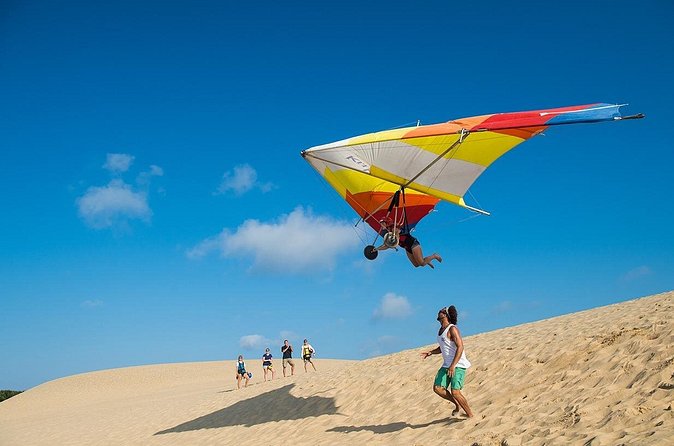
The best part of this lesson is its setting: Jockey’s Ridge State Park, the tall sand-dune area near where the Wright Brothers first flew. You learn the basics, carry your gear across the dunes, then make five short training flights with an instructor close by.
I like the small maximum group of three, which gives the instructors plenty of time to offer corrections after each attempt. I also like the gentle introduction: you stay close to the sand, use a harness and helmet, and build confidence one flight at a time. The main drawback is physical. Walking uphill through loose sand and running for takeoff can be tiring, especially on a hot, windless day.
Key points to know before you book
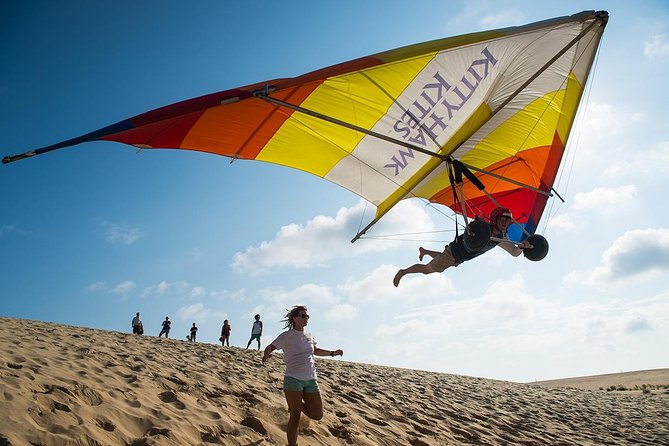
- Five training flights: The lesson gives you repeated chances to improve, not just one quick ride.
- A 30-minute ground class: You learn the basic movements before carrying the equipment to the dunes.
- Low-altitude beginner flying: This is training near the sand, not a long, high, untethered glide across the coast.
- A small class: The maximum is three people, so coaching stays personal.
- Weather matters: Wind can shorten, delay, reschedule, or cancel the lesson.
- Bring your own basics: Bottled water and sun protection are not included.
Learning to fly at Jockey’s Ridge
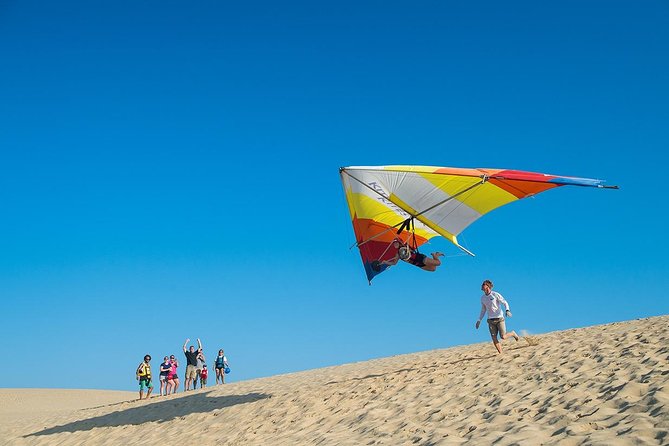
This experience takes place at 300 W Carolista Drive in Nags Head, at Jockey’s Ridge State Park. The location gives the lesson a special sense of place. You are not simply practicing a sport on a flat field. You are learning on a broad coastal dune near one of aviation’s most important sites.
The Wright Brothers connection adds meaning, but the dunes also shape the activity itself. You will walk over soft sand, climb to a launch area, and work with the wind. That setting is beautiful, though it demands more effort than the three-hour duration might suggest.
The lesson is designed for complete beginners. You do not need prior hang gliding experience, and the equipment is supplied. The activity includes a hang glider, helmet, and harness, so the $149 price covers the main gear and instruction rather than leaving you to arrange separate rentals.
The listed rating is 4.9 from 75 ratings, with 97 percent recommending the experience. That matches the strongest part of the lesson: the instructors are repeatedly praised for clear directions, patience, humor, and close attention to safety. Names that come up include Larson, Brad, Ben, Legs, Drake, Michael, Josh, Cooper, Rich, Megan, and Branden.
More Hang Gliding Flights in the world:
- Rio de Janeiro: Hang Gliding Adventure
★ 4.6 · 760 reviews - Rio de Janeiro: Hang Gliding Tandem Flight
★ 4.8 · 426 reviews - Rio de Janeiro: Hang Gliding or Paragliding Flights
★ 4.7 · 132 reviews
Ground School takes 30 minutes
Your first step is a 30-minute interactive Ground School session. This is where you get the basic instructions before heading onto the dunes. Pay close attention here, because the movements you learn on the ground will matter once you are suited up and moving quickly toward the sand.
After class, you have a short break to collect your belongings, use the bathroom, and prepare for the flight portion. This is the sensible time to handle anything you do not want to carry onto the dunes. Bring water and sun protection from the start, since neither is included.
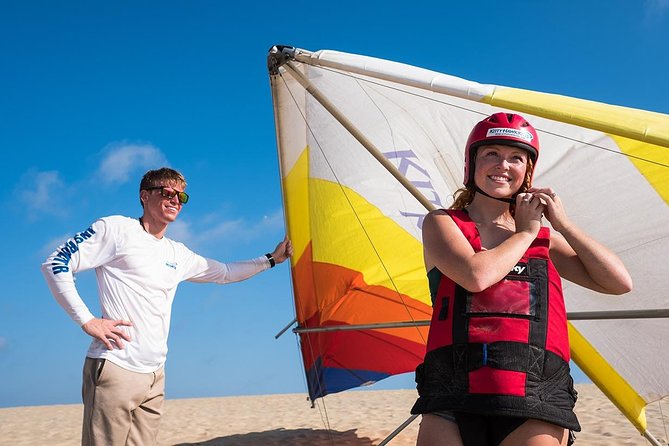
You receive a helmet and harness, then carry them with you. That detail matters. The walk to the launch area is part of the lesson, and you will not simply step from a shop into a waiting aircraft.
The instructors keep the mood friendly while staying focused. Several experiences describe instructors helping nervous beginners feel comfortable, then offering immediate tips after each flight. That approach works well for a sport where small changes in body position and timing can make a noticeable difference.
The walk across loose sand is part of the workout
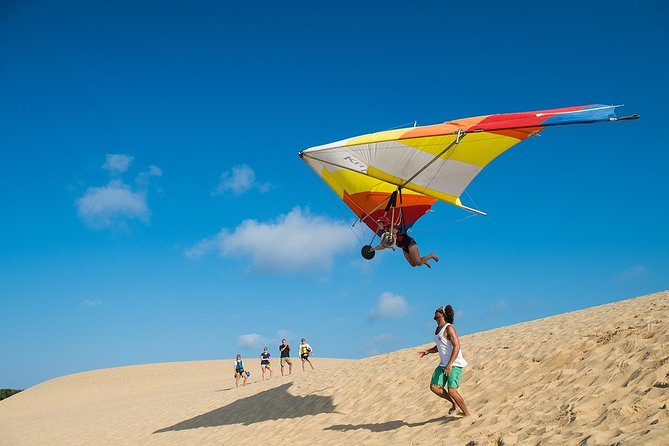
Once everyone is geared up, the class walks out to Jockey’s Ridge for the flight session. The route includes boardwalk and loose sand, followed by an uphill walk on the dunes. You may also need to walk back up the slope between flights.
This is the part of the lesson that deserves the clearest warning. The sand can be strenuous, and the hill used to position yourself for another glide can feel steep. You should be in reasonably decent shape, especially if you plan to make the most of all five flights.
Heat adds another concern. There is little or no shade on top of the dunes, and a sunny day can become uncomfortable quickly. Water, sunscreen, a hat, and clothing suited to strong sun are practical choices. Wear footwear that you can manage in sand, though you may remove your shoes in the dune area.
One participant pulled a hamstring and managed only one flight, which is a useful reminder to warm up and avoid treating the first run like a sprint. The activity is suitable for many beginners, but it is not passive. You will walk, climb, run, and land in sand.
Five flights let you learn by repetition
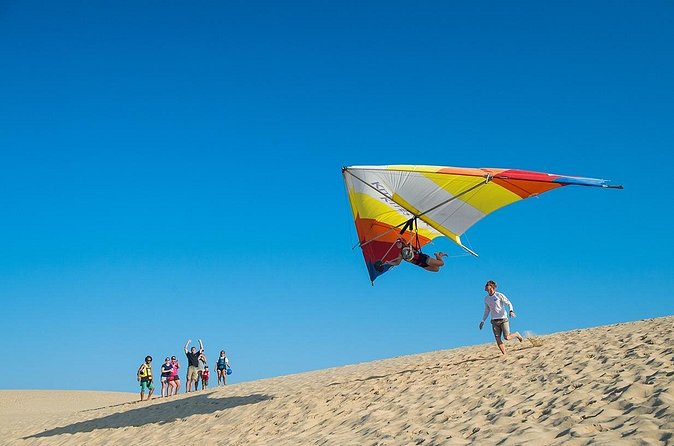
The flight portion lasts about two hours, with five training flights per person. The exact feeling of the lesson depends on wind and your own progress, but the structure gives you repeated practice instead of a single attempt.
The glides are low. You should not book this expecting long, high flights or the sensation of soaring freely far above the ground. One person specifically found the experience lower and shorter than expected, with the aircraft remaining connected to the ground by the training setup.
That may disappoint someone imagining a full afternoon of silent coastal flight. For a first lesson, though, the low height has real value. You get to focus on instructions, body position, running, and landing without being far from the sand. Several first-time participants described the soft dune landings as forgiving, including one person who lost track of the instructions and landed awkwardly without injury.
Expect to make mistakes. The instructors give real-time advice and explain how to improve on the next attempt. Some people report clear progress across the five glides, which is exactly what this format is meant to provide.
Listen for short commands and follow them rather than overthinking. One useful instruction mentioned repeatedly is flare, the action used near landing. You will hear the teaching team call out guidance as you move, so staying alert matters more than trying to look graceful.
A few more flights around the world worth a look
- Paragliding First Class Above Ohrid
★ 4.5 · 8 reviews - Paragliding First Class
★ 5.0 · 2 reviews
The instructors are the strongest part of the lesson
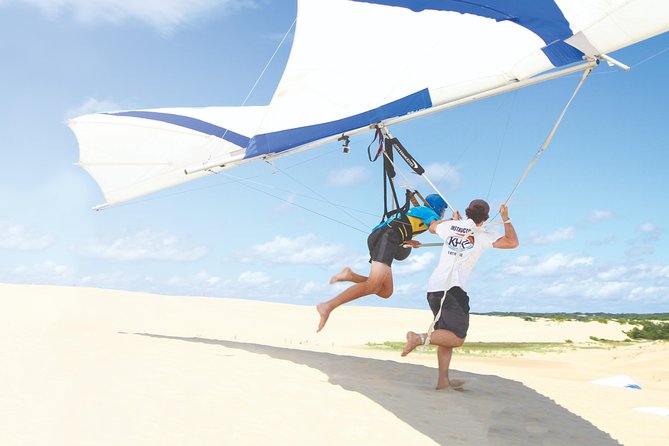
The staff make a major difference here. The best teaching comments are consistent: clear explanations, patient coaching, quick corrections, and an ability to calm nervous first-timers.
Drake helped one nervous couple feel at ease. Ben and Legs guided a family ranging from age 16 into their 60s. Larson and Brad earned praise for patient instruction, while Rich and Megan made the session comfortable and fun. Those details suggest a teaching style that adjusts to the person rather than assuming everyone arrives equally athletic or confident.
The maximum group size is three. That is unusually useful for a lesson involving several flights, because you are not lost in a large line of people waiting for a turn. The instructors can watch your attempt, point out a specific problem, and help you apply the correction on the next run.
The group may be smaller still. One family had the field almost to themselves, while another session involved one participant. That can make the pace feel personal, although the total length will still depend on wind, instruction, and the number of people in the class.
The instructors also take weather seriously. On one occasion, strong wind shifted a morning session to the afternoon. In another case, poor conditions ended the lesson early. That may be frustrating, but hang gliding needs suitable wind, and safety should take priority over forcing the schedule.
How the $149 price holds up
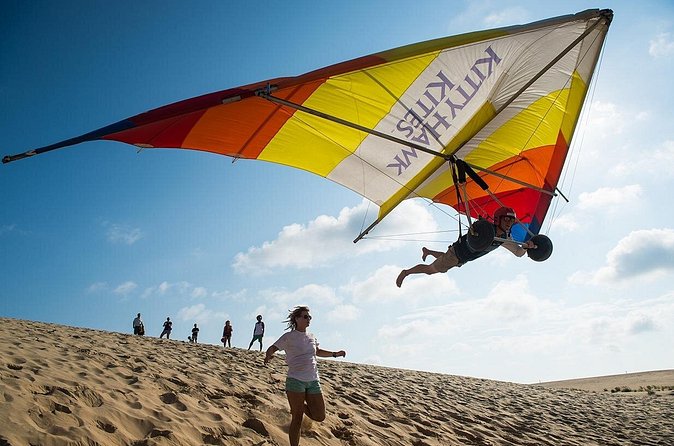
At $149 per person, this is not a cheap add-on to a beach day. It is a specialized lesson with equipment, instruction, and five attempts over roughly three hours. You receive the hang glider, helmet, and harness, so you are paying for access to the gear as well as for coaching.
The value improves if you care about learning rather than simply getting a quick thrill. Five flights let you notice improvement, and the small group means your fee buys more direct attention than a crowded activity might provide.
The price is less attractive if you expect a long, high-altitude flight. This is a beginner training session with short, low glides. You are paying for a controlled introduction to the sport, not a sightseeing flight.
I would compare it with the cost of other memorable Outer Banks activities, but the more important question is what you want from the day. If you want a distinctive experience connected to the Wright Brothers and enjoy learning a physical skill, the price is reasonable. If you mainly want an effortless view from above, choose a different type of excursion.
Who will enjoy this most
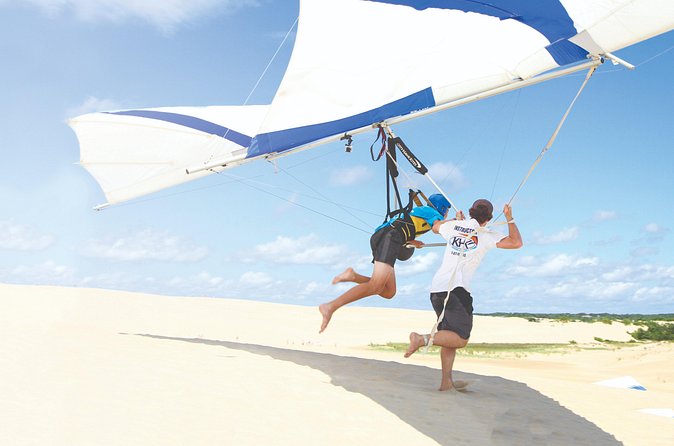
This lesson suits teenagers and adults who want to try something new and are willing to follow instructions closely. Families have taken part with children as young as 13, and one group included people from age 16 into their 60s.
You do not need to be an athlete. Several beginners with little athletic ability managed to fly, and the instructors work with people at different skill levels. Still, you need enough mobility to walk across sand, climb a dune, and run during takeoff.
The stated weight limit is 235 pounds. That is a firm planning detail, so check it before booking. The activity is not suitable for anyone who cannot safely manage the walk or running portion.
Service animals are allowed, and most people can participate. The supplied information does not promise a specific adapted setup, so contact the provider directly if you have mobility concerns or need other accommodations.
This is also a good choice for people who enjoy a little uncertainty. Wind controls the schedule, and your lesson may be delayed, shortened, or canceled. If your Outer Banks visit is tightly planned, book early enough to leave room for a weather change.
Prepare for sun, sand, and changing wind
The best preparation is simple:
- Bring bottled water.
- Apply sun protection before walking onto the dunes.
- Wear comfortable clothing suitable for heat and movement.
- Warm up your legs before the flight portion.
- Leave room in your schedule in case wind changes the timing.
- Keep personal belongings to a minimum during the dune walk.
The activity ends back at the starting point, so you return to the school after the flights for a wrap-up and review. You can expect to discuss what you learned and finish the session there.
Do not assume the weather will be comfortable just because the lesson is outdoors near the beach. One session became unpleasantly hot on top of the dunes, where shade and protection are limited. A cool day with good wind may feel ideal, while a hot day can make the walk and repeated climbs the hardest part.
Weather can also work in your favor. Strong but manageable wind creates the conditions needed to fly, while excessive wind can stop the lesson. If poor weather cancels the activity, you can choose another date or receive a full refund.
What happens after the last glide
After each person completes the five flights, the group returns to the Hang Gliding School. The final review gives you a chance to go over the basic skills and think about how your attempts changed from the first to the last.
Some people finish feeling ready to try again. Others may decide that one session was enough. Either outcome makes sense. This lesson gives you a real introduction without asking you to commit to a longer course.
The strongest memories are likely to be practical rather than polished: carrying a harness through warm sand, hearing an instructor call out a correction, trying to keep your body position steady, and landing on a soft dune after a brief glide. That hands-on quality is what makes the activity different from simply being carried above the coast.
The setting also gives the session a memorable story. You are learning to fly near Kitty Hawk, close to the place where powered flight changed the world. You will not recreate the Wright Brothers’ first flights, but the connection adds a fitting backdrop to your own first attempt.
Should you book this beginner lesson?
Book it if you want a hands-on first taste of hang gliding, you can manage a sandy uphill walk and short run, and you are comfortable with a weather-dependent schedule. The small class, five flights, supplied equipment, and attentive instructors make this a strong introduction for families, couples, and solo beginners.
Skip it if you want high, long, untethered soaring, dislike physical exertion, or have no flexibility if wind changes the plan. The flights stay low, and the dunes can be hot and tiring.
For the best chance of enjoying it, bring water, protect yourself from the sun, loosen up your legs, and listen closely to the instructors. If you do that, $149 buys more than a thrill. It gives you a safe, memorable way to try a new skill in one of America’s most meaningful flying locations.
FAQ
Where does the beginner hang gliding lesson take place?
The lesson takes place at Jockey’s Ridge State Park in Nags Head, North Carolina. The meeting point is 300 W Carolista Drive, Nags Head, NC 27959.
How long does the activity last?
The full experience lasts approximately three hours. It includes a 30-minute Ground School session, preparation, the walk to the dunes, about two hours of training flights, and a final review.
How many flights are included?
Each person receives five training flights during the flight portion of the lesson.
Is hang gliding equipment included?
Yes. The experience includes the hang glider, helmet, and harness.
Is there a weight limit?
Yes. The maximum stated weight is 235 pounds.
Do I need previous hang gliding experience?
No previous experience is required. The lesson begins with an interactive introduction before you go to the dunes.
How many people can join the class?
The activity has a maximum of three travelers.
What happens if the weather is poor?
The lesson requires suitable weather. If poor conditions cause a cancellation, you can choose another date or receive a full refund. Strong wind can also lead to a schedule change or a shorter session.
Can I cancel for a refund?
You can cancel at least 24 hours before the start time for a full refund. Cancellations or changes made less than 24 hours before the start time are not accepted for a refund.
Just added around the world
- Zermatt: Paragliding Passenger Flight with Matterhorn Views★ 5.0 · 2 reviews
- Villach/Ossiachersee: Paragliding “Action” Tandemflug★ 5.0 · 4 reviews
- Hang gliding flight in Rio de Janeiro★ 5.0 · 6 reviews
- Zaragoza: Aragonese Paragliding Experience★ 4.3 · 4 reviews
- Ultralight Flight in Pokhara: Annapurna & Fishtail View★ 5.0 · 2 reviews
- Vang Vieng: Paragliding Experience with Hotel Pickup★ 5.0 · 3 reviews
- Full-Day Guided Tour To Interlaken with Paragliding Flight★ 5.0 · 8 reviews
- Transylvania Targu-Mures: Paraglider pilot for a day★ 5.0 · 2 reviews
USA Paragliding, compared.
Paraglide Maui’s 1K Tandem Paragliding Experience
Read our review →
Los Angeles: 30-Minute Tandem Paragliding Experience
Read our review →
Tandem Paragliding flight with instructor in Malibu
Read our review →
Malibu Hills to Beach: Tandem Paragliding Flight Adventure
Read our review →
3000′ Discover Hang Gliding Tandem Flight with a Instructor
Read our review →
Browse the lists this flight appears in